
Guides & Tips
Powering a Hotel-Grade Rain Shower at Home
Oct
Summary:
- A basic instant water heater restricts flow rate to heat water on demand, which is often insufficient for a wide rain showerhead. Check litres per minute, not wattage.
- An instant heater with a built-in booster pump (a motor that actively supports water pressure) can power a full rain shower without a storage tank or ceiling installation.
- Storage heaters are suitable for back-to-back family use but run continuously, carrying standby heat loss whereas instant heaters heat up only what you use.
- Decide before the renovation: retrofitting a storage heater after tiling means reopening finished walls.
You have found the rain showerhead you want. The renovation is weeks away. Now comes the decision that most guides gloss over: which water heater will actually power it properly.
Get the water heater decision wrong, and it will cost you twice: once in the bill, and again when you are standing under a wide rain showerhead that trickles instead of pours. By the time most homeowners realise the mismatch, the tiles are up, the walls are sealed, and the replumbing bill is not a small one.
This guide is designed to help you prevent these common installation mistakes. The instant heater vs storage heater decision and the rain shower must be chosen together. The reasoning is simpler than most renovation guides make it sound.
Why Consistent Water Pressure Makes or Breaks a Rain Shower
A rain showerhead is designed to spread water across a wide surface area, typically 200mm to 300mm in diameter. To do that well, it needs consistent water pressure pushing flow evenly through every nozzle. When the pressure behind it is too weak, the outer nozzles simply do not fill, and what should feel like a warm downpour becomes a thin, uneven trickle.
For families living in HDB (Housing and Development Board) flats, this matters more than most expect. Incoming water pressure varies by floor level and building age. On upper floors especially, rain shower pressure can drop noticeably if the heater is not matched to the showerhead’s needs.
Does an Instant Heater Deliver Optimal Water Flow?
An instant water heater heats water the moment you turn the tap, which makes it a practical choice for most homes. To heat water on demand, it slightly slows the incoming water flow so the heating element has enough time to raise the temperature.
That process works well for most handheld showerheads, but it does set a ceiling on water flow rate, measured in litres per minute (LPM). The number that matters most is not wattage: it is the LPM the heater delivers at the showerhead. A wide rain showerhead needs more water volume to cover its full surface, so a basic instant heater may not always meet that demand.
Before you commit, check 3 things:
- The heater’s LPM output rating.
- The rain showerhead’s minimum recommended flow rate.
- Whether the 2 figures align. If they do not, the showerhead may underperform.
For homes with a rain shower in mind, there is a specification that changes the equation entirely.
What a Built-In Booster Pump Does for Your Rain Shower
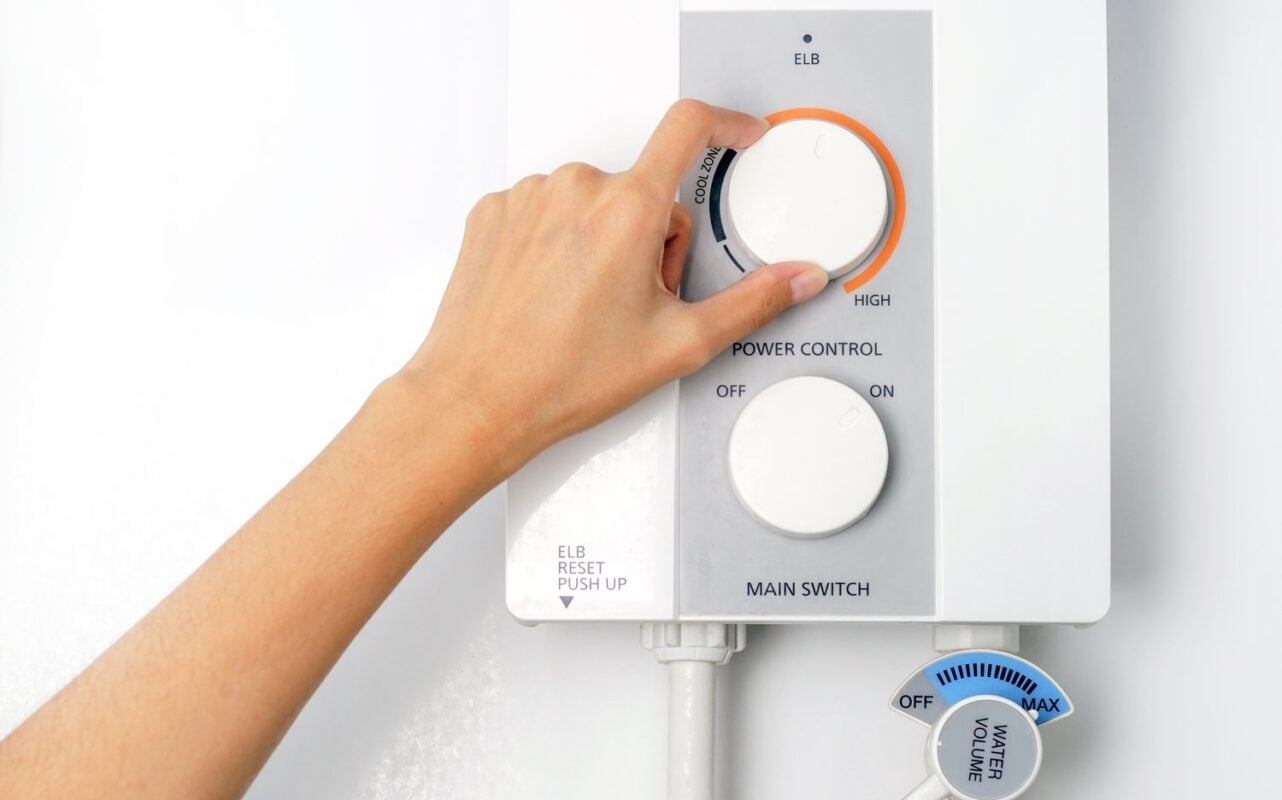
A built-in booster pump is the key specification to look for if you want an instant heater and rain shower in the same bathroom. It actively supports mains pressure, helping water reach the showerhead at a stronger, steadier flow.
Certain instant water heaters include a built-in booster pump, usually a DC (direct current) motor. When water enters the heater, the motor actively boosts the flow rate before it reaches the showerhead, delivering stronger, steadier pressure than household pipes alone can provide.
The result is a compact wall-mounted unit that can support a rain shower experience without needing ceiling space for a storage tank. If an instant heater and a rain shower are the combination you have in mind, a booster pump model is what makes it work.
When Does a Storage Water Heater Make More Sense?
For larger families in Singapore, a storage water heater offers something an instant unit cannot. Storage models are available in capacities ranging from 15 to 35 litres, giving families the flexibility to match tank size to actual demand.
An instant heater heats only what you use, carrying no standby heat loss. Storage heaters expend energy continuously to keep the tank at temperature. The right choice comes down to your daily routine:
- Choose storage if your family needs back-to-back showers or high volume on demand.
- Choose an instant model if energy efficiency and unlimited on-demand flow are the priority.
- Choose a larger storage tank if your morning routine is busy and consistent hot water across the household is non-negotiable.
Once you have a sense of your household’s routine, the next step is matching that choice to the right rain shower set.
Matching Your Rain Shower Set to the Right Heater
Finding the best water heater for your rain shower comes down to whether the unit can supply the flow and pressure your showerhead is built to receive.
Here is how each heater type matches up:
| Heater type | Best rain shower match | Suited to |
| Storage water heater | Full-width rainfall panel | Any household where ceiling space is available. |
| Instant heater with booster pump | Wide rain shower set | Homes with low water pressure and no ceiling installation. |
| Standard instant heater | Rain-style shower head | Homes with good water pressure where a rain-style spread is preferred. |
Once you know which heater type suits your showerhead, the next decision is when to commit, and that depends entirely on where you are in the renovation.
Planning Your Bathroom Plumbing Before Renovation
Selecting your water heater early in a bathroom renovation protects your budget and prevents damage to your newly finished walls. Making this decision before tiling ensures your infrastructure aligns perfectly with your chosen model.
For rain shower installation in Singapore, having the heater decision confirmed before works begin is what keeps the job clean and on budget.
| Storage Water Heater | Instant Water Heater | |
| Hot-Water Piping | Requires dedicated pipe runs to every outlet. | Does not require hot-water piping. |
| Ceiling Work | Usually requires a reinforced mounting position. | Does not require ceiling work. |
| Wall Penetrations | Wall penetrations are needed for pipe routing. | Wall penetrations are minimal. |
| Best Time to Decide | Should be planned before renovation begins. | Can be decided later, although earlier is still better. |
| If Decided After Tiling | Can be costly to retrofit. | Usually straightforward to install. |
Beyond plumbing and timing, the heater choice has one more dimension worth considering: how it shapes the look of the finished bathroom.
Every bathroom layout is different. Get a clear recommendation matched to your floor level, space, and household routine before the tiles go down. Contact the team at 707 My Family Heater.
Which Water Heater Keeps Your Bathroom Looking Its Best?
Choosing the right water heater quietly defines your bathroom’s final look and feel, especially when a premium rain shower serves as the focal point of your design.
Concealed storage water heaters sit completely hidden above a false ceiling, maintaining pristine, uninterrupted walls around your premium rain shower. This hidden installation lets a sleek showerhead take center stage, preserving a clean aesthetic for minimalist bathrooms.
Modern slim instant water heaters offer a refined, elegant look compared to older generations. Because the unit is mounted directly on the wall, its exact placement becomes a key design choice alongside your plumbing layout.
The question worth settling early: would you prefer the heater completely out of sight, or are you happy with a well-designed unit as part of the room?
Whichever you choose, the goal is the same: a shower that performs as well as it looks.
How to Recreate the Hotel Shower Experience at Home
Once the layout and aesthetics are settled, the final question is whether the combination you have chosen can deliver what a hotel shower feels like.
What makes a hotel shower feel the way it does is not just the showerhead. It is the combination of wide rainfall coverage, steady pressure from start to finish, and hot water that holds its temperature throughout.
Both routes can create that hotel-style shower experience, but they do it in different ways.
Use the table below to compare which setup fits your bathroom, space, and daily routine.
| Storage Heater | Instant Heater With Booster Pump |
| A full tank helps deliver stable pressure throughout the shower. | Active pump boost helps deliver consistent flow without a tank. |
| It requires a ceiling cavity for tank installation. | It only needs wall-mounted installation. |
| It is best suited for larger families and back-to-back showers. | It is best suited for compact bathrooms and homes with low water pressure. |
The choice between them is a trade-off between space and simplicity, and either way, your family deserves to get it right. Getting it right starts with finding the model built for your bathroom.
Let 707 Help You Choose the Right Instant Heater vs Storage Heater
Choosing the right instant heater vs storage heater for a rain shower comes down to your bathroom layout, your family’s daily routine, and the space you have available. A storage heater provides strong water volume from a concealed position, while a booster-pump instant heater can deliver rain-shower performance without ceiling infrastructure.
At 707 My Family Heater, every model is built with safety, efficiency, and everyday comfort in mind, backed by over 50 years of experience in Singapore homes.
Browse the full range, or speak to the team before your renovation begins.